Showing posts with label garlic mustard. Show all posts

Thursday, April 27, 2017

Wild Dinner: Garlic Mustard and Cleavers Pesto with Dryad's Saddle


wild mushroom
Dryad's Saddle (Polyporus squamosus)
Sometimes when I'm out looking for morels, I don't find any morels. If I'm lucky, I will find Dryad's Saddle (aka Pheasant Back, aka Polyporus squamosus.) If it's early enough in the season they will be tender and juicy and delicious. I'm happy to report that was the case today.

Also while out looking for morels, I passed piles of (weeded) garlic mustard, but I also passed fields of it where the volunteers hadn't yet reached.

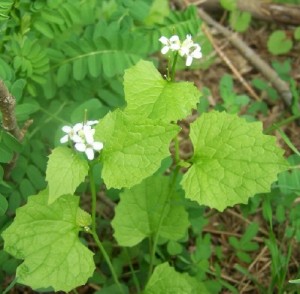
flowering garlic mustard
Garlic Mustard (Alliaria petiolata)

So I thought, "You know what would make a nice dinner...."

So even though I didn't find morels, I returned home with a bag full of Dryad's Saddle, garlic mustard, and some cleavers, which is a delicious fresh spring green (yay!) with the texture of sandpaper (boo!), but blended into pesto it is quite nice.

cleavers
Cleavers (Galium aparine)

cleavers stuck to sweater
Demonstration of how cleavers use their sandpaper-like texture to stick to you.
I like to cut the pungent taste of garlic mustard with a less bold green: cleavers and chickweed (Stellaria media) are top on my list this time of year.

Recipes:

Garlic Mustard and Cleavers Pesto:

Ingredients:

  • 2 cups greens (I used mostly garlic mustard with a bit of cleavers)
  • 2 cloves garlic
  • 1/4 cup walnuts: dry roasted then splashed with lemon juice and tamari at end of cooking
  • 2+ Tbsp olive oil
  • salt
  • lemon juice
  • nutritional yeast (optional, but nice addition if not using Parmesan cheese)

Directions:

  1. In a food processor, first process garlic into small pieces.
  2. Dry roast walnuts in iron pan until just start to smoke and turn brown. Turn off heat and add a splash of lemon juice and tamari, stir quickly to coat all the walnuts.
  3. Add walnuts to processor and pulse a little.
  4. Add greens in batches with oil and pulse until blended.
  5. Add lemon juice, salt, nutritional yeast to taste, pulse until blended.


pesto

Mix in to favorite pasta and enjoy.

pesto pasta


Side of Dryad's Saddle:

Cut the dryad's saddle thinly, then saute in butter or oil until browned (stir or flip so both sides cook.)

cooked wild mushroom

And serve:

mushrooms and pasta

Enjoy the wilds of spring!

Happy Foraging,

Melissa

Wednesday, May 4, 2016

Garlic Mustard Pesto

Garlic Mustard is an invasive plant, brought to America as a culinary herb in the 1860's. Many local and state parks have volunteer days spent pulling this invasive herb out. By all means pull it up from your garden...but don't be so quick to throw it in the compost! This is a delicious plant and early spring is when its flavor is at its best.


The leaves become bitter as the weather gets hot, so they are best collected in early spring and summer. Leaves can be collected either from the ground rosettes (pictured above) or from the stalk. Garlic Mustard leaves become more triangular when the plant bolts, and the leaves come up the flower stalk of this small four-petaled flower (unlike dandelion, whose leaves stay on the ground as the flower stalk is sent up).


Notice the 4-petaled white flowers blooming at the top of the plant. The leaves climb up the flower stalk and become more triangular once the plant flowers. 

You can eat garlic-mustard leaves both before and after it flowers. The leaves, flowers, and root are edible (the root tastes like horseradish!)

Flowers and chopped leaves can be added to salads for a nice pungent garlic flavor.

One of my favorite ways of eating garlic mustard is making pesto. Use your favorite pesto recipe and swap garlic mustard for fresh basil. If you don't have a recipe on hand, try this one. Pesto can be enjoyed on pasta, spread on crackers or tomatoes, on sandwiches, pizza..any way you can think of!


Garlic Mustard Pesto

* 2 cups garlic mustard leaves, washed and patted dry
* 1 small garlic clove, peeled
* 1/4 cup olive oil
* 2 Tbsp pine nuts, lightly roasted on stove top (can roast walnuts in place of pine nuts)
* 3 Tbsp grated Parmesan cheese
* 1 Tbsp lemon juice
* sea salt to taste

In a food processor, blend garlic and garlic mustard while drizzling in olive oil.

Add pine nuts, cheese, lemon juice and a little salt and blend.

Taste and add salt if necessary.

I mixed some into gluten-free pasta with more roasted pine nut and a chopped tomato. It was excellent!

Here's to wild foods!

Melissa Sokulski
Food Under Foot